Wednesday, August 1, 2007

Thailand

Beaches, Cities, People, Food--so much to love!

Truly the land of many smiles, it is easy to do just that. The fellowship from Fund for Teachers allowed for a few days in Thailand, but we decided to stay for longer on our own(not a hard choice). We explored the famous beaches (but only the West side) and the mellow South in Trang which is famous for waterfalls and caves. Currently, we are in Bangkok enjoying the city and the bustle again while fostering dreams of living here. We fear there is no time for the North on this trip, but there is always next time.

Our greatest boon was finding a connection to a sea gypsy village and school, hopefully we can start a relationship between Oak Forest in Houston and the kids on Ko Libon. The culture and people are so warm and friendly and the kids really want to talk to "farangs" or foreigners. Our students will love it and can explore and ancient and evolving way of life.

There's been so much to share, so check out just a few of our pictures and adventures. For extra fun, view the pictures as a slideshow!

--Marie View Post

Education & Culture

We are lucky enough to have spent good time in Singapore, Malaysia, and Thailand on this trip, and get a flavor of the culture in each place. Coming into this trip we knew that culture plays in a big role in education, but we had a pretty stereotypical and general view of southeast Asian culture. These three countries share the same peninsula, but there are great differences in religion, attitude, hospitality, wealth, and organization. Singapore is a small place and has a culture all its own. After seeing more of Asia, we can better see why Singapore is so special.

Singapore has a top-notch educational system, but it would be a mistake to just say that it's Asian culture and those Asian kids just work harder. We don't want to take anything from the great work that Singapore teachers do, the excellent organization of the schools, the design of the curriculum, the challenging textbooks, or their math problem solving method. There is, however, a different culture and attitude in Singapore that is certainly responsible for much of its success.

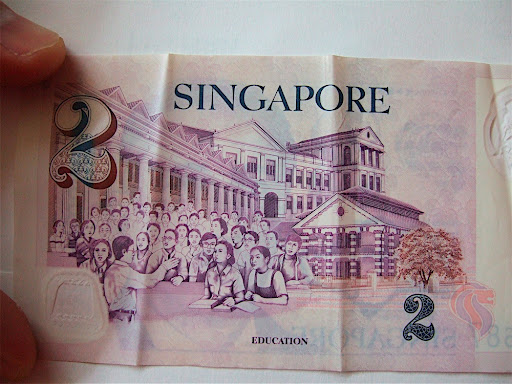
this picture is not legal tenderThe country of Singapore is an island, about the same size as Houston. It's not blessed with oil reserves, fertile farmland, or much natural resources at all. The strongest resource in Singapore is its people. The nation understands that education is vital to its wealth and development. The Singaporean 2-dollar bill (which is used more often than our 2-dollar bill) has a picture of some kids at school with the caption "education." The 100-dollar bill is for youth. The government, of course, supports education beyond slogans and money. The back of the money is indicative of the attitude toward education that one can see all over Singapore.

We saw many things in Singapore that we expected from Asian schools. Students, as well as strangers that we met, have great respect for teachers. There is much more time spent on homework or supplemental instruction after school. Parents motivate their students, are involved in school, and spend lots of money on extra books or programs to make sure that their children do well in school. In the end, Singapore students exit school speaking English and some other language(usually Chinese) with a first-class education and a good work ethic prepared to work and succeed in a global workforce.

There are many things that Marie and I learned in Singapore that we can copy at home, but unfortunately culture is not of those. This great attitude toward education is evident in all parts of Singaporean society. We hope that in our role as teachers and sharing our story from Singapore we can affect some small change back home in Houston and the United States.

I feel like I want to do my next post on why math is important; thinking about Singapore gets me pumped up about school.
-Morgan View Post

Sunday, July 29, 2007

On our way to Bangkok

We're in Trang at the moment checking e-mail and waiting for our train to Bangkok. We hope to have time and internet in Bangkok to post more pictures and share our trip to Thailand's southern beaches.

-Morgan View Post

Wednesday, July 25, 2007

Island Time


We're taking things much slower in Thailand, and that includes internet. We have lots of great stories and photos to share, but those will have to wait for some faster internet. We've enjoyed great beaches, snorkeling, kayaking, caves, food, monkeys, and people. We helped our freind Andrew from Burma set up a website, and shared teaching stories with Lawrence, a former professor in Bangkok.

We should be in Bangkok in another few days and should be able to get some better internet.

-Morgan
View Post

Discipline in Singapore

We still have more to share about teaching in Singapore. I thought that we might make a mention about classroom management. We thought before we left that teachers in Singapore kept the kids in line by using corporal punishment.
They are definitely serious about punishing naughty boys and girls. Some people might remember the American kid who got caned in Singapore a while back. Drug traffickers are frequently hanged as well. There are fines for eating on the subway, smoking in prohibited places, littering, and many others in the "fine" city of Singapore.
Students who mess around and cause trouble in class can get caned. Surprisingly, teachers told us that they very rarely hit children. We got the feeling that it never really happens in the schools that we visited.
So how do they keep the kids in line? Certainly, some of the credit can go to a culture that has different respect for teachers and education. Culture, however, can't be the only explanation. Teachers have excellent support from the administration. We were very impressed by the student and teacher counselors in the schools. It seems like teachers really try to work with the student even before they have to call the parents in for a conference.

-Morgan View Post

Saturday, July 21, 2007

Taking it Easy in Thailand

We've been in Thailand for the past couple of days. It's absolute paradise. We have beautiful white sand beaches, clear water, limestone cliffs, good snorkeling and lots of shady hammocks. At the moment we're staying in a little beach bungalow on Phi Phi Island. We're far off from the nearest town, and we only have electricity for a few hours at night. It's been a total adventure. Yesterday we swam and scrambled through a tunnel to get to an amzaing beach surrounded by cliffs.

I don't know the next time we will have internet access, but we still have more to post about the schools in Singapore and pictures to share from Thailand. This picture is one I got from the internet of Maya Beach. It's where the filmed the movie The Beach. We didn't see the movie, but we like the beach.

-Morgan

View Post

Saturday, July 14, 2007

Teachers In Singapore

We learned a lot about math in Singapore and we have a lot to share. Teachers make a bigger difference than books or buildings, and teachers are big part of Singapore's success. The teachers in Singapore are very well trained and prepared to teach. They are expected to complete 100 hours of professional development compared to 40 hours for Texas teachers. All teachers, even for the youngest grades, have many more hours of college credit for math. US education degrees are usually pretty light on the math requirement.
In all of the schools that we visited, the teachers seemed very committed to the students. Most stayed late after school for tutorials or extra-curricular activities. We didn't talk to anyone that felt burned out by teaching like we often notice at home.

All of the teachers, except for 1st or maybe 2nd grade, are departmentalized, so each teacher teaches one subject to several different classes. The students are grouped in classes by ability level, but all teachers will teach to the high and low students. There are no teachers just for GT or regular kids. I believe this builds a stringer sense of unity on the campus, as teachers work to help all of the kids, not just "my class."
The Singaporean teachers move from class to class to teach while the kids stay put. The teachers, therefore, don't have their own classroom. Instead, they have a staff area with office-style cubicles. I think this is a great idea, because it helps teachers work together and collaborate. It's much harder to work with a teacher on the other side of the school, but so much easier if your desk is right next to the other 6th grade math teachers.
The teachers have excellent resources and textbooks to work from, but they create many tests and lessons collaboratively. For example, end-of-term exams are written by the teachers as a team. Those tests get approved by the head math teacher and principal.
There also seems to be more accountability and review of teachers. Teachers get the usual observations by the principal, but they also participate in peer observations every year. The head math teacher and principal will also check the students activity and work books to make sure that everybody is doing the work that they're supposed to be doing. There is also a teacher counselor for teachers that are having trouble with students.
-Morgan
View Post

Selamat Datang to Kuala Lumpur

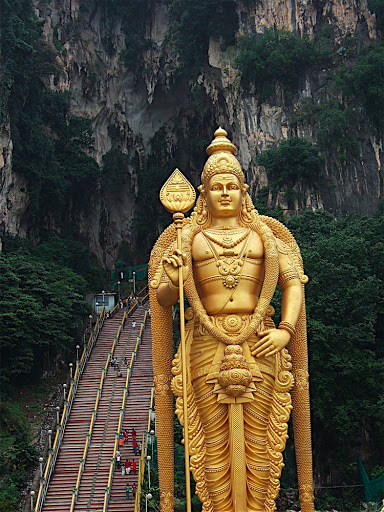
Today, we hit our KL groove and had a blast! We visited a Hindu temple in Batu Caves, explored Lake Gardens, visited the National Mosque, and got "in the know" about Malaysian food. See the pictures from Batu Caves!

Kuala Lumpur literally means "muddy bank" as it was founded at the confluence of two rivers. Most of the originals Chinese prospectors succumbed to malaria and the like, but the city is alive and well. It is home to around 2 million people in about 240 square kilometers (150 miles). It has come a long way since it was ceded by the sultan of Selangor in 1974.

Again, we've been extremely impressed with the diversity and peaceful melding of so may different religions and ethnicities. The residents of Malaysia are typically at LEAST trilingual, if not more. We stopped at an Indian restaurant by the temple for a drink (there were a lot of steps!) and a group of Chinese tourists came in. The servers all starting conversing like crazy with them--it was really neat. The Malay people are notoriously warm and friendly. We had a blast sining John Denver songs with our cab driver, Haji. There has been a lot to see. Morgan's stellar navigational skills have seen us through as we took in some of the sights.

Only 13 KM north of the city is Batu Caves, discovered only 120 years ago by an American naturalist. 272 steps scale the monkey-ridden cliffs up to Temple Cave and are adorned with a humongous statue of Muruga, or Lord Subramaniam, to whom the caves are dedicated.

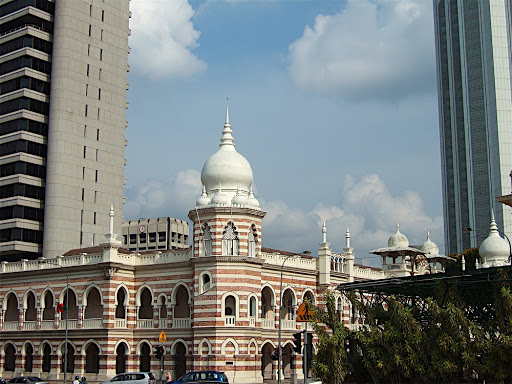
Then we trekked through Lake Gardens to take a peek at the National Mosque. On our way was the old bus station, another great example of Islamic influence on architecture old and new.

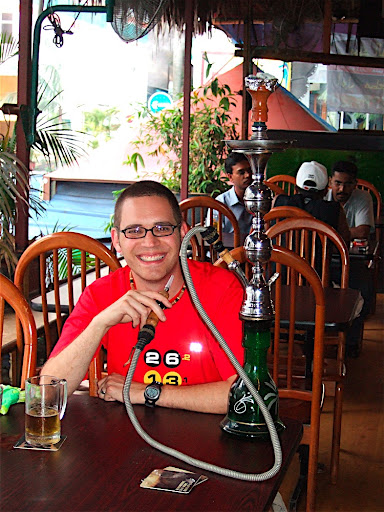
Our cab driver took us to a dynamite Malay place for lunch and let us in on how to order vegetarian food. We topped off the day with a final jaunt through Chinatown and back to our hotel. Not without a stop to try the shisha, or sultan's pipe after supper. The cooled and flavored tobacco isn't so bad. You only live once!
-Marie
View Post

Friday, July 13, 2007

Bright Lights, Big City

Some of our entries were getting a little too long on the blog. Be sure to click the view post link at the bottom to read the whole entry.

We enjoy the comments! It let's me know that I'm not just writing this for myself. Although, anyone who knows me knows that I love to journal on vacation.


We have some more posts coming about the schools in Singapore.

-Morgan View Post

Kuala Lumpur, Malaysia


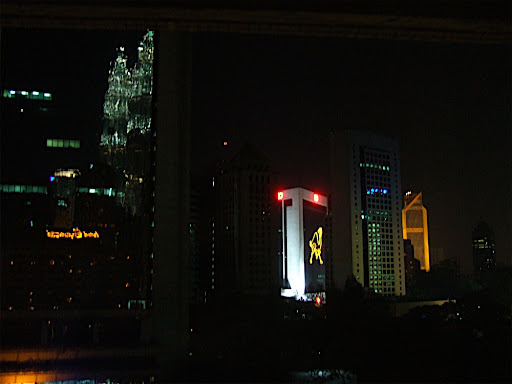
We arrived in Malaysia by bus on Wednesday. The drive was quite pretty. We alighted at the bus station, and well, who can judge anyplace by the bus station? We are hoping to grow into the city. We enjoy the architecture and the tall buildings.

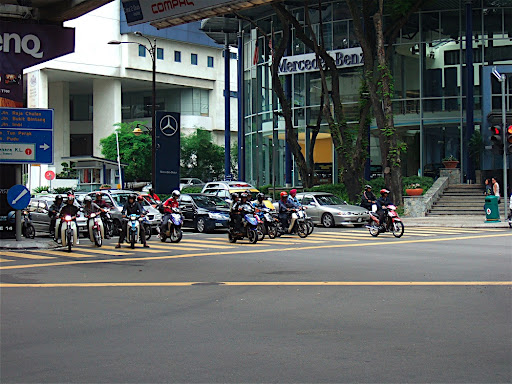
Foot is supposedly the best way to see the town, so on Thursday and Friday, off we went. Let's just say our lives have flashed before our eyes numerous times. The sidewalks themselves are more than precarious even without the buses and cars zooming past--regardless of the color on the lights. They start and stop randomly and make mountain hiking look like a breeze. Mix in motorcycles everywhere, especially sidewalks and medians, and it makes for excitement to say the least. Jaywalking is essential and often we are forced into the game of "chicken." However, we do feel that we've seen a lot of sights this way.

Chinatown was fun for a walk-through. Really good fruit and all kinds of amazing DVDs, Tiffany, Prada, and such there. "Genuine imitation!" We settled for some shirts instead.

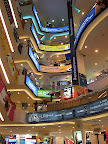
We looked for software for our mac, but it is definitely a PC kind of place. The prices were actually a little higher than online in the US. Check out this electronic, techno, gadget/gizmo mall.

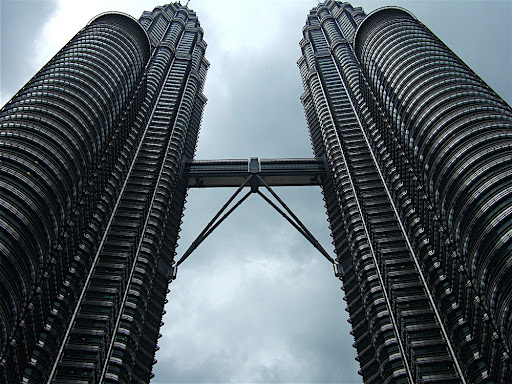
Petronas towers were the tallest buildings in the world for a while. The architecture is quite stunning. Its design is based on an Islamic symbol. A lot of the architecture has Muslim influence and makes for beautiful buildings and a really neat feel.Side note--Some one emailed a question about Christian houses of worship. Numerous churches were scattered everywhere in Singapore, and we noticed a lot of Methodist and Baptist. There was a Catholic Cathedral, but we never made it by there. We did see the oldest Catholic church for Indians in Singapore. They were not invited to attend mass in the church located in what in now the Colonial District, so they built their own on the outskirts of what now is Little India. It looked just like a small Catholic church you would find in Houston Heights. The only noticeable difference was the statue of Mary wearing fresh flowers as the Indians do and the worshipers were dressed in saris. The Baptist churches were in all sorts of smaller buildings without much adornment, as they tend to be in Houston.We have only seen two Christian churches here in KL as it is predominately Muslim. Islam came here peacefully as early as the 13th century.

We have found Malay food to have a lot of meat in it, but there is some of the best Indian food we've had as well as Thai. Our favorite stop has been the reflexology row for treatments on our feet. It was a darn good 1/2 hour foot massage, and it couldn't have come at a better time than at the end of a long day. Our dogs were barkin'!

KL Pix

View Post

Thursday, July 12, 2007

Adios Singapore


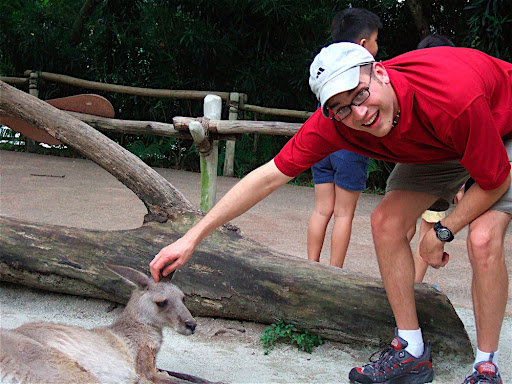
Part of our grant was to do cultural exploration and immersion in other parts of Southeast Asia, so we must bid Singapore adieu. We had our last meeting Tuesday morning and then raced to the Singapore Zoological Gardens that afternoon. It was honestly the best zoo we have ever seen, and better than any we could imagine. There is a big emphasis on conservation and the animals all have very large outdoor areas (instead of pens). Supposedly, they have the highest rate of births of captive animals which is an indicator of how content the animals are. One of the polar bears was born at the zoo, the only polar bear born in the tropics. Some highlights were a pygmy hippo born on the 4th of July, a polar bear feeding, and petting a kangaroo. The elephants and their trainers also put on a cirque de soleil (ish) show--could not be missed. Rumor has it that the night safari is a must, but sadly we had to go back to our hotel to pack. Next time perhaps?

Zoo pix

On Wednesday, we took a bus to Kuala Lumpur. It was a beautiful drive. We are settled into our hotel and are exploring the city. We'll let you know what we find. . . View Post

Schools

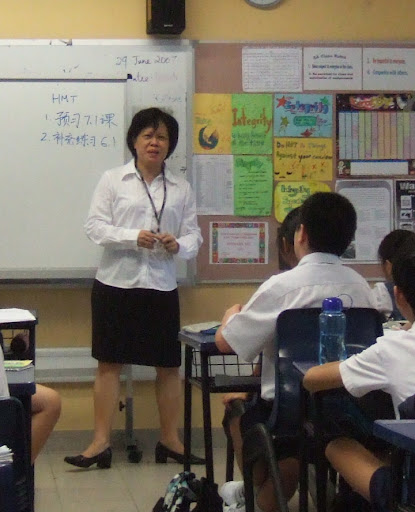
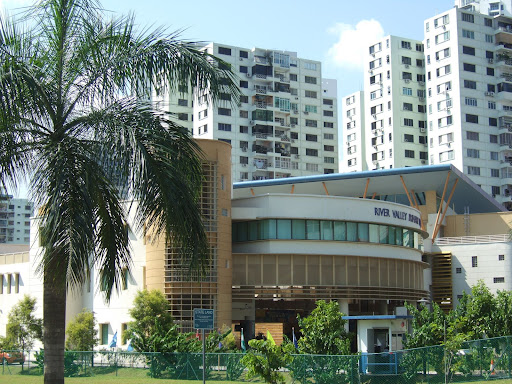
The physical structure of the all the schools is similar, yet intriguing. They are quite mammoth by our standards, but are set up very well. They are both indoors and outdoors and are centered around large courtyards, amphitheaters, and play areas. The classrooms are arranged to get maximum air flow and have numerous powerful fans. They really are quite comfortable especially considering it is quite hot and humid. You don't notice them being outdoors except for the noise coming from the playgrounds and surrounding areas. There are air conditioned parts such as the office, the teacher work rooms, and the largest gymnasium.
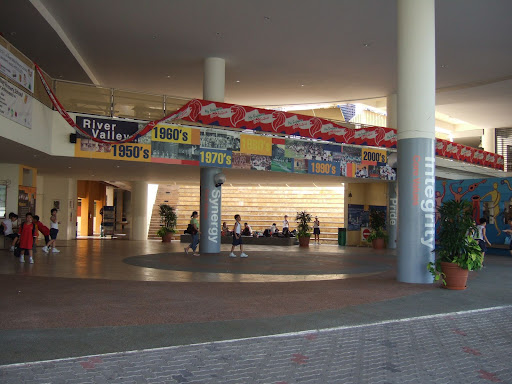
When entering a school, they all have guard gates with usually two attendants. They assist you in finding the office and checking in. The staff are very professional and courteous. Immediately upon entering, there are usually core values that the school has adopted prominently displayed around. These can include honesty, respect, risk, integrity, synergy, leadership, etc. These really come into play for the entire community. These are integral to the school and the classes then create classroom rules that uphold these big core values. They show up again in the hallways, other rooms, etc. There is student work all around, but it tends to be in banners or framed art pieces rather than bulletin boards.


The classrooms have quite a few desks in them as the class size is 40-43 for the A, B, and C classes, but it reduces to 30 - 33 for the "average" classes. The children stay in the room and the teachers switch. P1 and P2 have the same teacher all day, but they start departmentalization around P3. The exact logistics appear to depend upon the team and teachers, etc. They certainly do not have the classroom resources that we take for granted. The rooms are very tidy and the kids are in charge of keeping track of all the materials and stacks of papers since the teachers move in and out.

Since the teachers may not be stationed in one classroom, they have what they call a staff room. It looks like a typical cubicle office. They wouldn't let us take pictures because they were worried that it was too messy. PLEASE! (there was definite clutter, but you could tell folks were working). It seems to be really good for collaboration and for sharing resources. Being in such close proximity would really improve our teamwork so you didn't have to hunt somebody down.

The kids have a lot more physical freedom in the schools than we are used to seeing in the US. They can walk from class to recess or lunch by themselves and do quite well. Parenthetically, they get a half hour a day for recess on top of PE. The schools are ranked based not only of academics, but also physical fitness. There were only four restrooms in a school for over 1000 children, but, you know it by now, they were spotless.

There are lots of areas in the school that are green--a garden, a spice garden, and usually some other area. There were big outdoor theaters, play areas, courtyards, and other things. A couple of schools had a climbing wall, one had a museum, they all had art rooms, music rooms, computer labs, and science labs (all of which they come to with their teachers). They all had counseling rooms and some even had a teacher counselor.
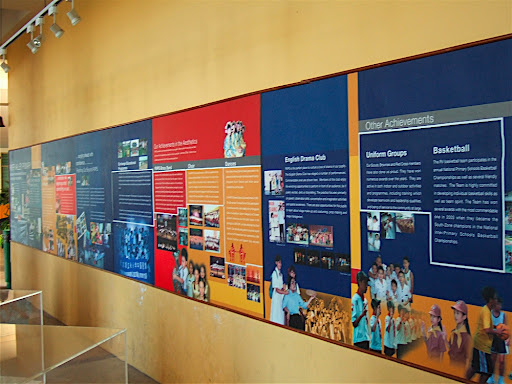
The desks are arranged in groups of two or four to promote interaction. We noticed that a lot of the classrooms also have tables outside in the hall. There are usually student groups working at these or peer tutoring going on. The students all seem on task (as much as to be expected) while out there. Cooperation is greatly encouraged.

Each of the schools have very specific uniform requirements. We started to notice that even the socks had the school logo. The students also have paper with the school logo. There are also flags and banners around with the school logo and also Singapore. There is a lot of national pride.

The kids usually arrive at school by 7a. They have silent reading for 15 minutes or a half hour. It is also a time for peer tutoring for those kids that are "average" or struggling. The cafeterias look to have 4 or 5 different stalls selling items. There is plenty of choice for the different diet requirements of the students. The school day officially ends at 1:30, but most kids are there until around 4p. That is when tutoring happens, as well as most extracurricular activities. When asked about homework, everybody replied, "a lot." While teachers really try to coordinate, students do have a big workload at home. (that is also the only discipline problem mentioned, but we'll post about that a different time. . .)
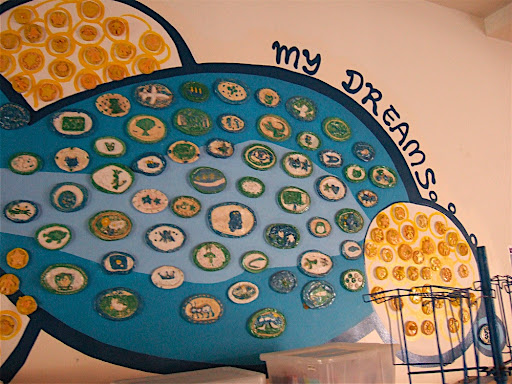
We didn't tour any, but we saw (walking around, on the train, and on the bus) a TON of International Schools as well as "mega" high schools. These were absolutely humongous and seemed more like community colleges. We also noticed that there were kids in school uniforms each day of the week. Even if school was not in session, they were involved in activities. See more school pictures.

-Marie
View Post